
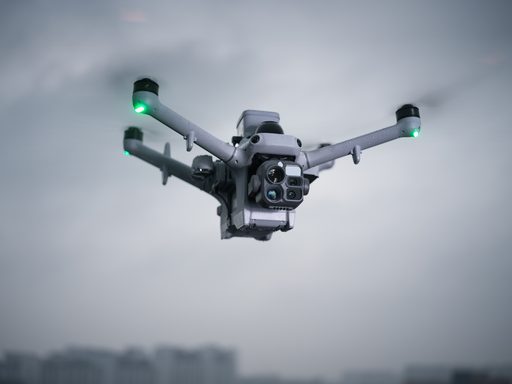
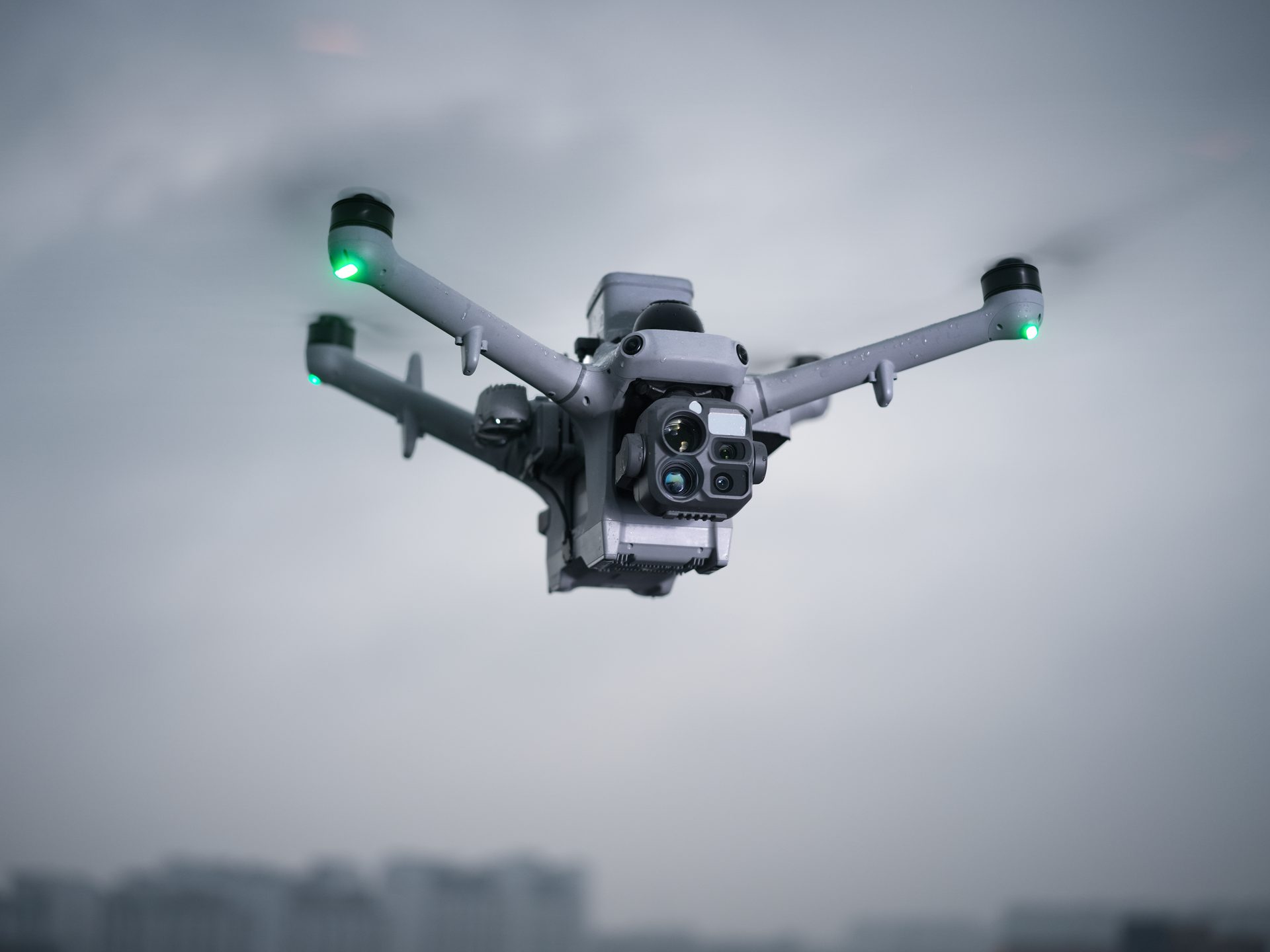

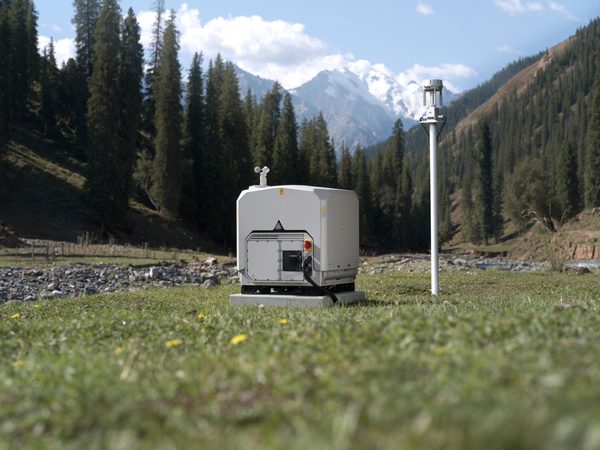
Twenty-five seconds. That’s how long the new DJI Dock 4 needs to pull a drained battery out of the Matrice 5TD and slide a fresh one in.
Dock 3 needed roughly half an hour of charging before its drone could fly again. For an inspection schedule, half an hour is an annoyance. For a police department or a fire brigade, it’s half an hour with no eyes over the scene.
DJI has launched the Dock 4 together with the new Matrice 5TD, and pitches it as a DFR system: dock as first responder. The spec sheet is long. LiDAR, mmWave radar, AI detection for 17 object types, you name it. I’ll be honest, though: the sensors aren’t what got me excited. Two things did. The battery swap, and how fast the drone now gets to the scene. For public safety, those two decide whether a dock is a nice-to-have or a real first responder.
Why the battery swap matters most
Picture a night shift. At 2 a.m. the drone launches to a reported break-in, flies overwatch for 40 minutes while patrol cars arrive, and lands. Twenty minutes later, a call comes in about a missing person near the river.
With a charging dock, you wait for the battery. With Dock 4, the drone is back in the air before the dispatcher has finished reading out the address.
Having spent the better part of a decade on DJI’s enterprise side, I always saw the recharge wait as the weak spot of docks for first responders. A dock that is ready most of the time is hard to build an SOP around.
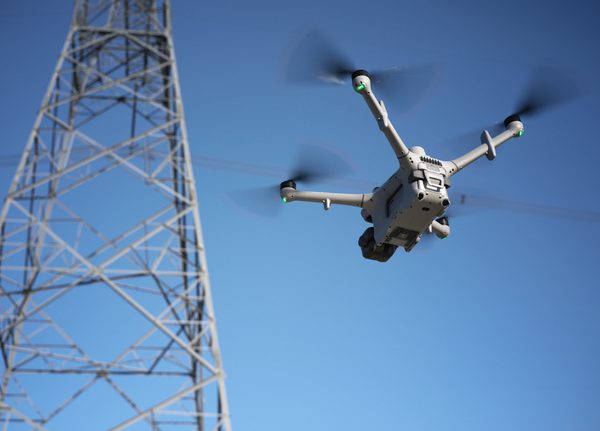
Add the Matrice 5TD’s 59-minute flight time, and one drone can stay over a scene for hours, with only a short pause for each swap.
Note: the 59 minutes was measured in a controlled environment, as DJI’s own footnote says. With wind, cold, or a spotlight hanging off the drone, plan for less.
To be fair, battery swapping in a dock isn’t a new idea. Other dock makers have offered robotic swaps for years. What’s different is that DJI is doing it now. When the biggest player in the market makes a feature standard, the rest of the market tends to follow.
Getting there before the patrol car
The second half of the story is speed. Once a command is issued remotely, the Matrice 5TD launches straight from the dock and flies to the scene at up to 21 m/s. That’s about 75 km/h.
Why does that matter? The Matrice 4TD on Dock 3 was limited to Normal mode when flying from the dock, which tops out at 15 m/s. If the 21 m/s holds for dock operations, and that’s how DJI’s announcement reads, the new drone is 40% faster to the scene.
On a 3 km call, that’s roughly 2 minutes 20 seconds instead of 3 minutes 20 seconds, before you count takeoff and climb. One minute doesn’t sound like much. Ask anyone who has waited for an ambulance.
-transportation-2-600x493.jpg)
The video link got quicker too. DJI quotes drone-to-cloud latency of up to 160 ms, about 32% lower than the previous generation. That won’t sound dramatic on paper. But the live feed is what the incident commander watches, so a smoother view counts.
The new DJI O4 Ground Station helps with the other big city problem: signal. It extends the Matrice 5TD’s link, so you can deploy in places where high-rises or substation walls would normally block it.
What does this mean for public safety teams? Ground crews roll up with context instead of guesses. Where the fire is spreading, how many people are on scene, which entrance to use.
The rest of the spec sheet
Beyond the dock story, the Matrice 5TD is a capable drone. The highlights:
- Telephoto: 11× zoom (252 mm equivalent), details from 400 m away, pin-level defects on power lines at 100 m
- Infrared: up to 2560 × 2048 in UHR mode, 2K recording, 32× zoom at night
- Fusion mode: visible-light and thermal feeds combined in one frame
- Night vision: 4K full-color without a spotlight, plus an NIR auxiliary light for black-and-white
- Laser rangefinder: 3 km, with range and PinPoint coordinates overlaid on the feed
- Obstacle sensing: three-directional mmWave radar, rotating LiDAR, and six-directional low-light vision, including thin wires at night
- Onboard AI: real-time detection of 17 object types, such as cars, boats, and animals
- Payloads: up to 450 g, like speakers, spotlights, or a parachute, plus a built-in warning light
- Weather: dock rated from -40 °C to 50 °C, drone takes off, lands and flies in winds up to 12 m/s
- Mapping: survey accuracy up to 10 cm at 12 MP
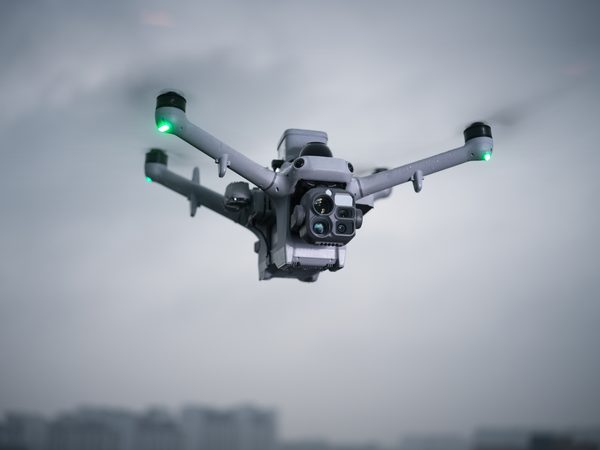
Two things stand out to me. First, the radar plus LiDAR combination. Thin power lines at night are exactly what makes me nervous about automated flights near infrastructure, so this is a welcome upgrade.
Second, the AI side in FlightHub 2. You can search the feed for objects by text or by image, and set alerts by SMS or email that trigger snapshots, recording, tracking, or hovering. That’s what makes a dock useful at 3 a.m., when nobody is staring at the screen.
For European operators, one more detail: the Flight Termination System module, which DJI calls a key technical requirement for C6 compliance. If you’re working toward BVLOS flights under the standard scenarios, pay attention to this one.
What I’d still like to know
DJI hasn’t shared a price yet. The press release only says Dock 4 will be sold through authorized DJI Enterprise dealers, and availability will vary by country.
I’m also curious how the swap mechanism holds up over the years. More moving parts in a box that sits outside at -40 °C means more things that can wear out. DJI is offering DJI Care Enterprise Plus for a dock for the first time, which tells me they’re thinking about the same question.
Still, at the end, a dock is only as good as its second flight. With Dock 4, the second flight is just 25 seconds away!
Thank you for reading! If you found this useful, feel free to share it or follow DroneHiTech on Facebook and Instagram.


